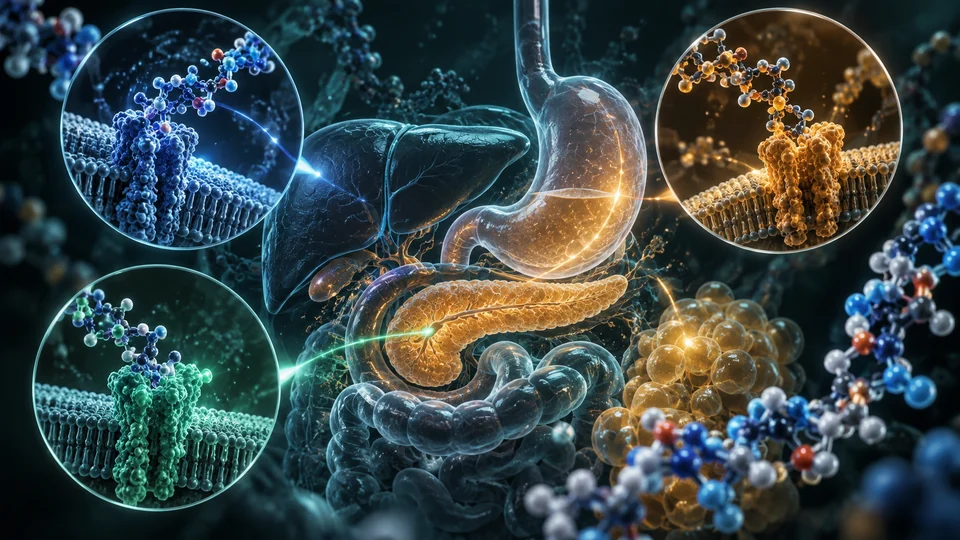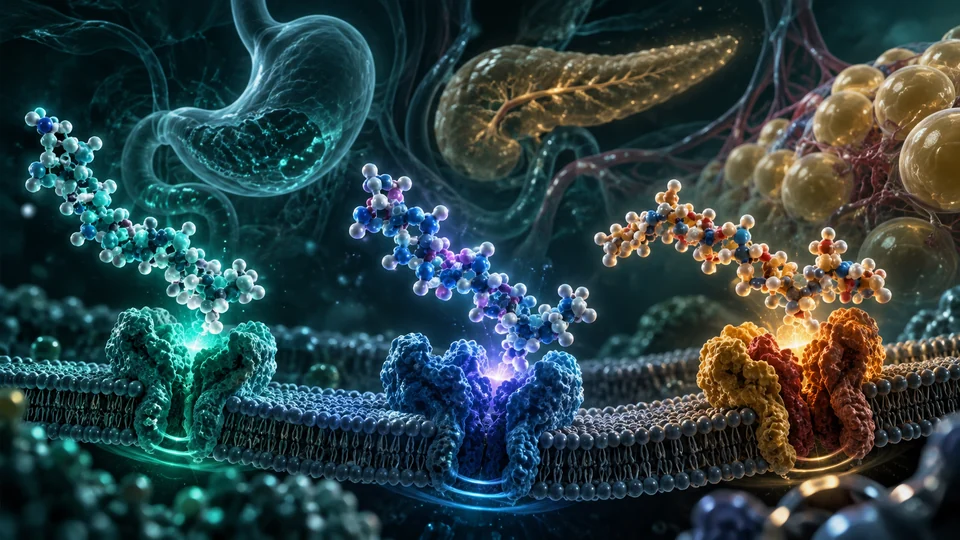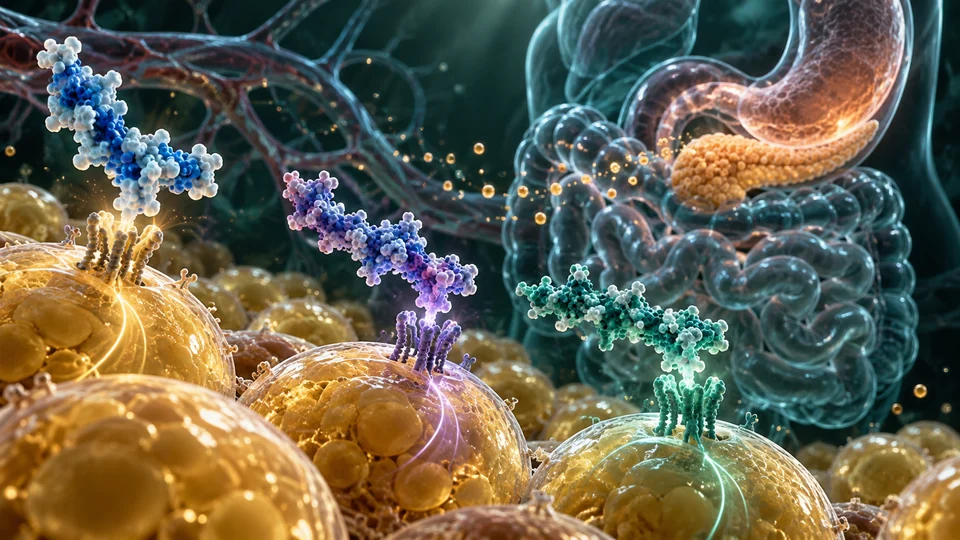
Myostatin is one of the primary negative regulators. It acts as a biological brake, ensuring that skeletal muscle does not grow beyond normal physiological limits. When myostatin is absent or blocked, muscle cells can increase in size and number.
Because of this mechanism, researchers have spent decades investigating whether raising follistatin levels could treat muscle wasting conditions such as muscular dystrophy or age related muscle loss.
The biology of myostatin and the growth brake
Skeletal muscle is an expensive tissue for the body to maintain. To prevent excessive energy consumption, human physiology employs a strict regulatory system that limits how large muscles can grow. The primary signal in this system is myostatin, a protein belonging to the transforming growth factor beta superfamily.
This binding triggers an internal signalling cascade involving Smad proteins, which ultimately tells the cell to stop dividing and stop synthesising new muscle proteins.
Researchers look for ways to block the myostatin protein after it has been produced, preventing it from reaching the cellular receptor.
How follistatin intervenes
When follistatin encounters myostatin in the extracellular space, it binds to it tightly. This physical connection neutralises the myostatin, making it impossible for the growth inhibitor to dock with the muscle cell receptor.
The follistatin gene produces a precursor protein. Before this protein becomes active in the body, it undergoes processing.
The pharmacokinetic reality of injectable peptides
Online vendors frequently sell vials of follistatin as an injectable peptide, suggesting it will produce significant muscle growth.
To achieve continuous myostatin suppression, a patient would theoretically need to maintain highly elevated follistatin levels around the clock. An injection of a rapidly clearing peptide creates a brief spike in concentration followed by a rapid decline.
Black market products and laboratory testing
The lack of clinical approval has not stopped the proliferation of follistatin products on the unregulated market. Because the compound is highly sought after by bodybuilders and athletes, it commands a high price. This creates a strong incentive for counterfeit products, and laboratory testing has revealed severe quality control failures across the industry.
In a 2019 study published in the journal Drug Testing and Analysis, researchers purchased 17 different black market products labelled as follistatin 344 and subjected them to rigorous electrophoretic and immunoblotting analysis. The results were alarming. Only nine of the 17 tested products actually contained any follistatin. In vitro 1
Even the vials that did contain the protein were highly problematic. All nine positive samples contained a modified version of follistatin with a histidine tag. A histidine tag is a sequence of amino acids added to a protein by laboratory researchers to make it easier to purify in a centrifuge. It is a tool for basic in vitro research, not a modification intended for human administration. In vitro 1
The researchers also found a high degree of oligomers in the samples. In vitro 1
A greater concern is that the vials lacking follistatin were often filled with cheaper, entirely different compounds. The researchers identified growth promoting peptides such as GHRP-2 in several samples. In vitro 1 This substitution explains why some users report increased appetite or water retention after buying what they believe is follistatin, as those are known effects of growth hormone secretagogues.
UK regulatory status and anti doping rules
In the United Kingdom, the legal and regulatory status of follistatin is clear. It is not an approved medicine. Under the Human Medicines Regulations 2012, a medicinal product needs a marketing authorisation to be sold or supplied. 2
No follistatin product has been granted a marketing authorisation. Because the injectable peptide lacks this data, it cannot be legally sold or prescribed as a medical treatment.
For athletes, the restrictions are absolute. The World Anti-Doping Agency maintains a comprehensive list of prohibited substances, and myostatin inhibitors are explicitly banned. Follistatin is listed under section S4 of the prohibited list, which covers hormone and metabolic modulators. It is specifically categorised as a myostatin inhibitor and is prohibited at all times, both in and out of competition. 3
Anti doping laboratories have developed specific electrophoretic detection methods to identify black market follistatin in blood and urine samples. Because the commercial products often contain the artificial histidine tag, testing authorities can easily distinguish between the natural follistatin produced by an athlete's body and the synthetic version injected from a vial. 1
The BioRx conclusion
Follistatin represents a fascinating area of muscle biology. The ability to neutralise myostatin and release the natural brake on muscle growth has profound implications for treating severe muscle wasting diseases.
However, the theoretical potential of myostatin inhibition does not transfer to the injectable peptides sold on the internet. Injecting a rapidly clearing, unapproved peptide is fundamentally different from the sustained myostatin suppression required for significant muscle growth.
When the pharmacokinetic limitations are combined with the proven contamination and substitution rates found in black market vials, the reality of commercial follistatin becomes clear. It is a highly experimental concept that remains strictly in the domain of laboratory research, not a viable or approved peptide therapy.
For more on the basic biology of these molecules, see What Are Peptides?.
UK regulatory status
The Medicines and Healthcare products Regulatory Agency regulates medicines in the UK. 4 Under the Human Medicines Regulations 2012, a medicinal product needs a marketing authorisation to be sold or supplied. 2
Frequently asked questions
What is follistatin?
Follistatin is a naturally occurring glycoprotein that binds to and neutralises myostatin. By blocking this protein, it removes a natural restriction on muscle growth and allows muscle cells to increase in size.
Do injectable follistatin peptides work for muscle growth?
Injecting a peptide provides a temporary increase in circulating protein, which is rapidly cleared by the body. There is no published human clinical trial data supporting the use of injectable follistatin 344 for muscle growth, and black market vials are frequently degraded or contain different compounds entirely.
Is follistatin an approved medicine?
No. Follistatin is not approved by the MHRA for human use. It remains an experimental compound, and the injectable products sold online are unregulated and unapproved.
Is follistatin banned in sport?
Yes. The World Anti-Doping Agency prohibits follistatin at all times under the hormone and metabolic modulators category, specifically classifying it as a myostatin inhibitor.
References
Studies marked "View study in BioRx" sit in the clinical studies index with their design and evidence grade.