The skin around the eyes ages differently from the rest of the face. It is exceptionally thin, lacks dense sebaceous glands and is subjected to constant mechanical stress from blinking and facial expressions. When the underlying structural proteins begin to fail, the repeated folding creates permanent creases known as crow's feet.
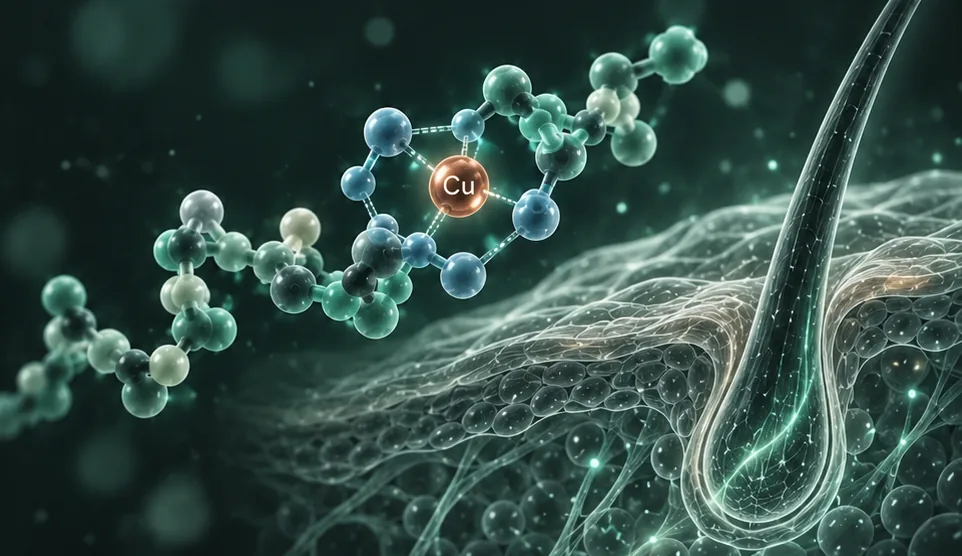
GHK-Cu (glycyl-L-histidyl-L-lysine) is a human peptide that has been studied for its ability to repair damaged tissue. Research shows that GHK-Cu acts on dermal fibroblasts, increasing the synthesis of collagen, elastin and glycosaminoglycans to improve skin tissue repair. Mechanistic 1
The anatomy of crow's feet
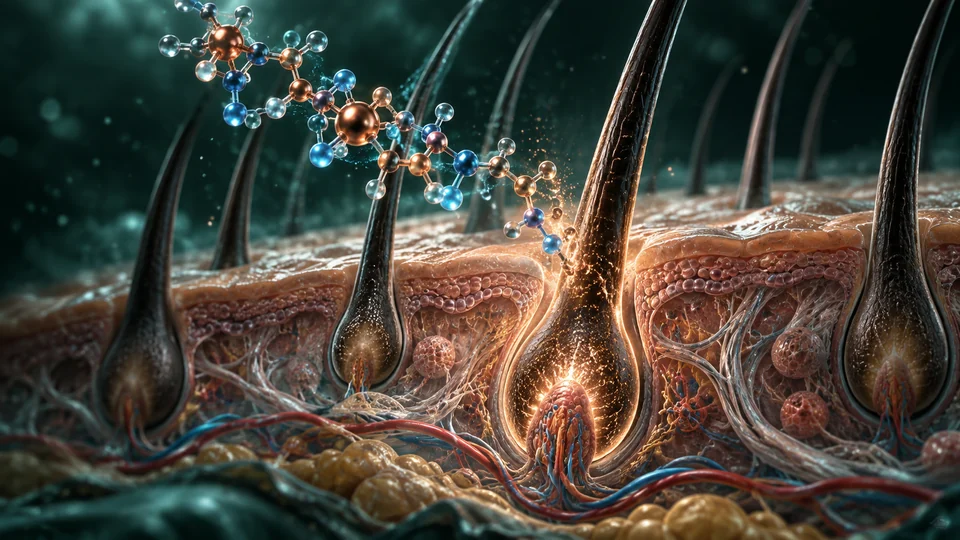
To understand how a peptide repairs eye wrinkles, it helps to understand why they form. The periorbital skin is exceptionally thin compared to other parts of the face.
In youth, a high density of collagen and elastin allows this thin tissue to snap back into place after the orbicularis oculi muscle contracts. As the body ages, the production of these structural proteins slows down. At the same time, environmental damage from ultraviolet light accelerates their destruction.
Without a strong, elastic support network, the skin can no longer resist the mechanical stress of constant movement. The temporary folds created by smiling or squinting eventually fracture the dermal structure, leaving permanent static wrinkles. Reversing this process requires more than surface moisture; it requires the physical synthesis of new structural proteins.
How GHK-Cu targets the extracellular matrix
GHK-Cu is a human peptide composed of the amino acids glycyl-L-histidyl-L-lysine. It has multiple biological actions that appear to be health positive, including the ability to improve tissue repair in the skin. Mechanistic 1
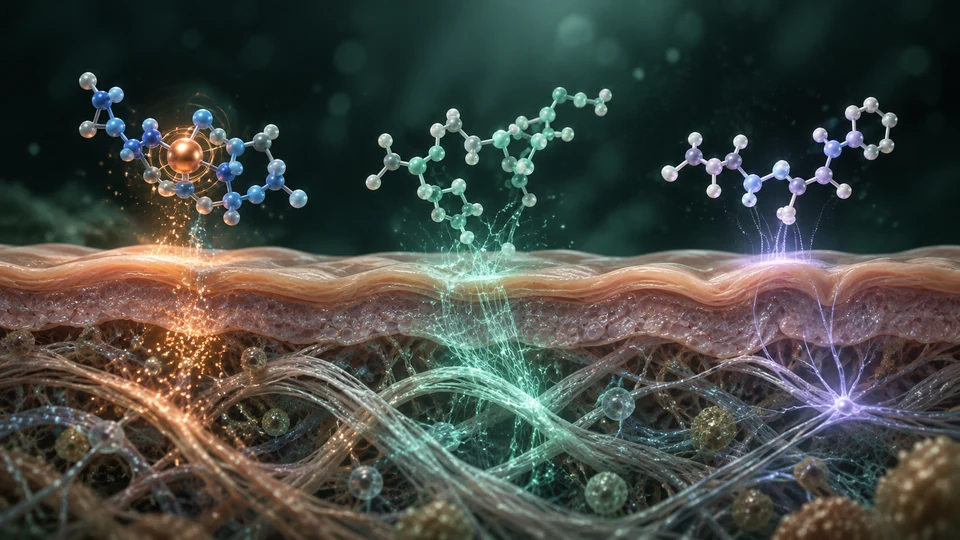
The peptide supports the function of dermal fibroblasts. Studies show that GHK-Cu increases the synthesis of collagen and elastin, which are key structural proteins in the skin. Mechanistic 1
The peptide also increases the synthesis of glycosaminoglycans. By stimulating these specific components, GHK-Cu provides materials the skin needs to rebuild and repair tissue. Mechanistic 1
Cellular protection and tissue repair
Beyond stimulating structural proteins, GHK-Cu possesses powerful cell protective actions. It has anti inflammatory activities and suppresses molecules thought to accelerate the diseases of ageing, such as NFκB. Mechanistic 1
The peptide also activates cell cleansing via the proteasome system and supports DNA repair. These diverse protective and healing actions help explain how the molecule improves tissue repair in the skin. Mechanistic 1
Gene expression and biochemical pathways
Recent genetic data helps explain the diverse protective and healing actions of the GHK-Cu molecule. Research reveals that the peptide regulates multiple biochemical pathways. Mechanistic 1
By modulating these pathways, GHK-Cu is able to support dermal fibroblasts and stimulate the outgrowth of blood vessels and nerves. This broad regulation explains why a single molecule can simultaneously increase collagen, reduce inflammation and improve the overall structural integrity of the skin. Mechanistic 1
Topical application versus other routes
No standard human dose has been established for GHK-Cu in medicinal applications. While injectable GHK-Cu is sometimes discussed in experimental contexts, there is no published human clinical trial demonstrating that systemic injection reduces facial wrinkles or repairs crow's feet safely.
UK regulatory status
In the UK, GHK-Cu is widely available in topical cosmetic products. The regulatory classification depends entirely on the claims made by the manufacturer and the intended route of administration.
Under the Human Medicines Regulations 2012, a medicinal product may not be sold, supplied, or offered for sale or supply without a marketing authorisation. 2
UK regulatory position
In the UK, medicinal products are regulated by the MHRA. 3 Under the Human Medicines Regulations 2012, a marketing authorisation is required before any medicinal product can be placed on the market. 2
The BioRx conclusion
Crow's feet form because the thin skin around the eyes loses its structural proteins and cannot withstand the constant mechanical stress of facial movement. GHK-Cu addresses this biological failure by supporting dermal fibroblasts and increasing the synthesis of collagen and elastin.
Research shows that the peptide regulates multiple biochemical pathways to improve tissue repair in the skin. By increasing glycosaminoglycan synthesis and activating cell cleansing via the proteasome system, the peptide provides a measurable mechanism for structural skin repair.
For a broader look at how this peptide functions across the body, see the GHK-Cu overview.
Frequently asked questions
What is GHK-Cu?
GHK-Cu is a human peptide composed of the amino acids glycyl-L-histidyl-L-lysine. It acts as a biological signal that regulates multiple biochemical pathways and improves tissue repair.
How does GHK-Cu help with crow's feet?
The peptide supports dermal fibroblasts and increases the synthesis of new collagen, elastin and glycosaminoglycans. This helps rebuild the structural proteins in the skin, making it more resistant to the mechanical stress that causes wrinkles.
Does GHK-Cu build collagen?
Yes. Research shows that GHK-Cu increases collagen and elastin synthesis and supports the function of dermal fibroblasts.
References
Studies marked "View study in BioRx" sit in the clinical studies index with their design and evidence grade.
- Pickart L, Margolina A (2018). Regenerative and Protective Actions of the GHK-Cu Peptide in the Light of the New Gene Data. International Journal of Molecular Sciences.PubMed · DOI · View study in BioRx
- Human Medicines Regulations 2012, regulation 46: a medicinal product needs a marketing authorisation to be sold or supplied
- MHRA, the Medicines and Healthcare products Regulatory Agency