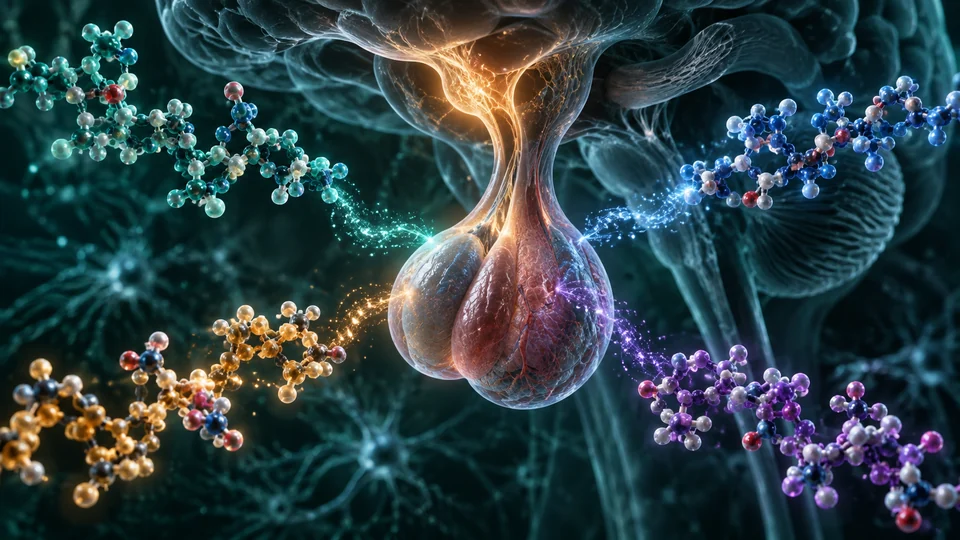
Growth hormone is a central regulator of human metabolism, body composition and cellular repair. Instead of administering synthetic human growth hormone directly, medical research has developed peptide compounds that signal the body to produce and release its own supply. These compounds are known broadly as growth hormone secretagogues.
The distinction between replacing a hormone and stimulating its natural release is significant. Direct replacement overrides the body's internal controls, which can lead to constant, unnaturally high hormone levels. Secretagogues work by amplifying the natural pathways, maintaining the normal pulsatile rhythm of hormone secretion. Understanding how these peptides function requires looking at the specific receptors they target and the clinical evidence behind them.
How the pituitary controls growth hormone
The anterior pituitary gland contains specialised cells called somatotrophs, which manufacture and store human growth hormone. These cells do not release their stores constantly. Instead, they secrete the hormone in distinct pulses throughout the day and night, with the largest pulses typically occurring during deep sleep.
Ghrelin is a 28 amino acid octanoyl peptide that regulates the release of growth hormone and may play an important role in bone and muscle growth, as well as food intake. 1
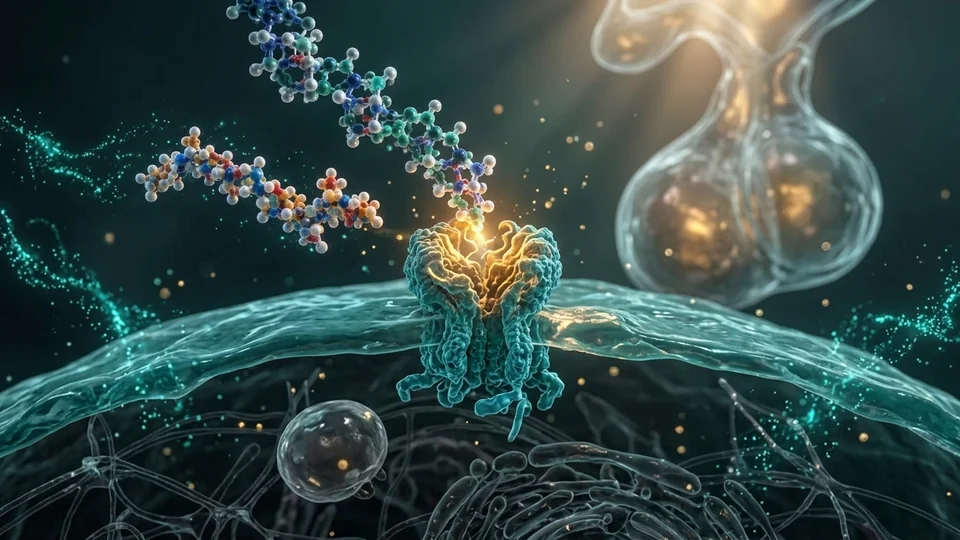
Peptide scientists have designed synthetic molecules to mimic these natural signals. By binding to either the GHRH receptor or the ghrelin receptor, these peptides prompt the somatotroph cells to release their stored growth hormone into the bloodstream, while still allowing the body's natural negative feedback loop to regulate the total amount.
GHRH analogues: Sermorelin
Peptides that mimic the action of natural GHRH are called GHRH analogues. They bind to the GHRH receptor on the pituitary gland, initiating the primary signal for hormone secretion.
Sermorelin is a GHRH analogue that has been discussed in the scientific literature as a potential approach to the management of adult onset growth hormone insufficiency. Human 2 No human dose has been established for sermorelin for adult body composition, fat loss or general use.
Ghrelin mimetics: Ipamorelin and GHRP-2
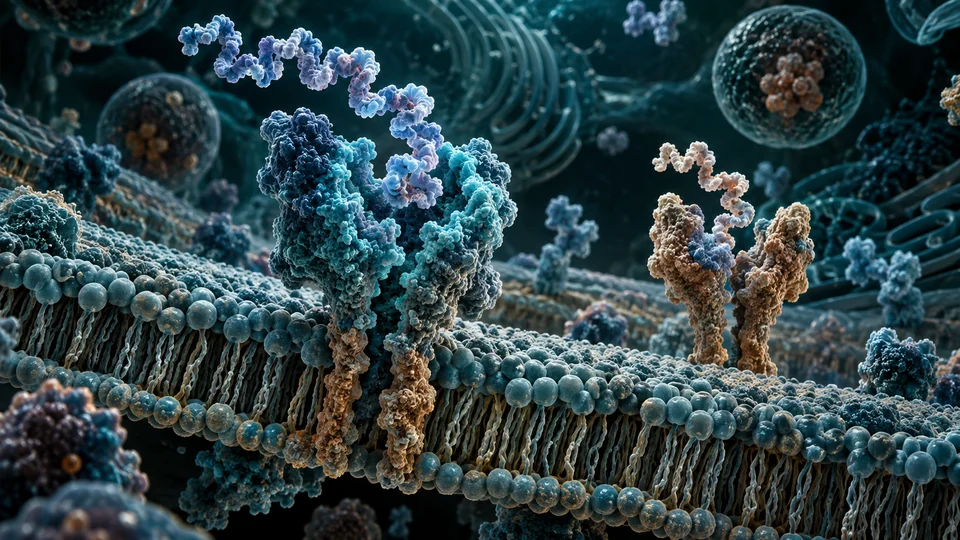
The second pathway for stimulating the pituitary relies on the ghrelin receptor, officially known as the growth hormone secretagogue receptor. Synthetic peptides that bind to this receptor are known as growth hormone releasing peptides (GHRPs) or ghrelin mimetics. They operate independently of the GHRH receptor, meaning they trigger a different internal mechanism within the somatotroph cells to release growth hormone.
A pharmacokinetic study in healthy human volunteers tested a dose escalation design comprising five different infusion rates of ipamorelin with eight healthy male subjects at each dose level. The researchers found that the pharmacokinetic parameters of ipamorelin were dose proportional, with a short terminal half life of 2 hours. The study confirmed that ipamorelin effectively stimulates the pituitary in humans, but no human dose has been established for general subcutaneous use. Human 3
GHRP-2, also known by its generic name pralmorelin, is an orally active, synthetic growth hormone releasing peptide. It mimics the actions of ghrelin. The use of pralmorelin as a diagnostic agent for growth hormone deficiency is based on its ability to markedly increase plasma levels of growth hormone in healthy subjects. Analysis has provided a cut off threshold value for the growth hormone peak of 15.0 micro g/L for the identification of patients with growth hormone deficiency. Human 1 No human dose has been established for GHRP-2 for general use.
Why a hormone rise is not a clinical outcome
For most growth hormone secretagogues, the evidence remains limited to pharmacokinetic data showing that hormone levels rise. Assuming that a temporary, peptide induced spike in growth hormone will deliver the same physical transformations seen with long term, high dose synthetic hormone replacement is a misinterpretation of the evidence. The body's negative feedback loop also ensures that natural production is tightly controlled, limiting the absolute amount of hormone that can be released regardless of how much peptide is administered.
Sermorelin
Limited evidenceGH secretagogues · 4 cited studies
Downgraded from 'mixed' on audit: the pivotal paediatric treatment study was open label and uncontrolled, the only cited adult study was open label in eleven men and found no change in IGF-1 or body composition, and no placebo controlled trial of sermorelin as treatment appears in the citation set at all. The former FDA approval, though genuine, is not itself controlled evidence.
UK status. No current UK marketing authorisation.
Ipamorelin
Limited evidenceGH secretagogues · 4 cited studies
Human data comprise a single phase 1 pharmacokinetic study and one well conducted phase 2 randomised trial in postoperative ileus that missed its primary endpoint (P=0.15) and all secondary endpoints; the remaining citations are preclinical, and there is no controlled human data of any kind for body composition, recovery or the other uses for which it is marketed.
UK status. No UK marketing authorisation.
GHRP-2
Limited evidenceGH secretagogues · 5 cited studies
Well replicated acute pharmacology and a Japanese regulatory approval for single dose diagnostic use only; therapeutic evidence is confined to uncontrolled studies of six or seven participants (one of which found no rise in IGF-1) with no adequately powered controlled trial of repeated dosing for any outcome.
UK status. No UK marketing authorisation.
UK regulations
In the UK, growth hormone secretagogues are classed as medicinal products because they alter physiological functions by exerting a pharmacological action. Under the Human Medicines Regulations 2012, a person may not sell or supply an unauthorised medicinal product, and it must be in accordance with the terms of a UK marketing authorisation. 4
The MHRA, the Medicines and Healthcare products Regulatory Agency, regulates medicines, medical devices and blood components for transfusion in the UK. 5 Currently, natural HGH peptides do not hold a marketing authorisation for general use or body composition enhancement.
- Metabolic & incretin 27
- GH secretagogues 8
- Growth factors 7
- Tissue repair 8
- Immune modulation 7
- Antimicrobial & antibiotic 5
- Neuroactive 24
- Melanocortin 9
- Reproductive & GnRH 11
- Endocrine & pituitary 17
- Cardiovascular & haemostasis 10
- Gastrointestinal 12
- Oncology & diagnostic 11
- Longevity & mitochondrial 21
- Cosmetic & dermatological 19
The BioRx conclusion
Peptides that stimulate the release of natural human growth hormone offer a targeted way to engage the pituitary gland without relying on synthetic hormone replacement. By mimicking the body's own GHRH and ghrelin signals, compounds like sermorelin, ipamorelin and pralmorelin can successfully initiate hormone pulses.
While the mechanisms are understood and the hormone increases are documented in human studies, the clinical applications remain strictly defined. The broader claims of anti aging and muscle building for secretagogues lack the controlled human trials required to prove them.
Frequently asked questions
What are natural HGH peptides?
Natural HGH peptides are synthetic peptide molecules designed to stimulate the pituitary gland to release the body's own stored human growth hormone. They are broadly known as growth hormone secretagogues.
How do GHRH analogues work?
GHRH analogues, such as sermorelin, bind to the growth hormone releasing hormone receptor on pituitary cells. This mimics the natural signal from the hypothalamus, prompting the cells to secrete growth hormone into the bloodstream.
What is the difference between ipamorelin and sermorelin?
Ipamorelin is a ghrelin mimetic that binds to the ghrelin receptor to stimulate hormone release. Sermorelin is a GHRH analogue. Because they target different receptors, they activate different internal cellular pathways.
Does a rise in growth hormone guarantee muscle growth?
No. A hormone increase is a physiological marker, not a clinical outcome. Measurable changes in muscle mass or fat loss require controlled human trials to prove efficacy.
References
Studies marked "View study in BioRx" sit in the clinical studies index with their design and evidence grade.
- PubMed, PMID 15230633
- PubMed, PMID 18046908
- Gobburu JV, Agersø H, Jusko WJ, Ynddal L (1999). Pharmacokinetic-pharmacodynamic modeling of ipamorelin, a growth hormone releasing peptide, in human volunteers. Pharmaceutical Research.PubMed · DOI · View study in BioRx
- Human Medicines Regulations 2012, regulation 46
- MHRA, the Medicines and Healthcare products Regulatory Agency