The endocrine system operates on strict balance. When a person introduces outside hormones or continuous peptide stimulation, the body often responds by shutting down its own production. This is not a design flaw but a protective mechanism. Biology relies on pulses and feedback loops, and flooding a receptor continuously can cause it to stop responding entirely.
Understanding how this happens requires looking at negative feedback and receptor desensitisation. It also explains why researchers are studying upstream signals like kisspeptin to see if the reproductive axis can be stimulated without shutting it down.
The hypothalamic pituitary gonadal axis
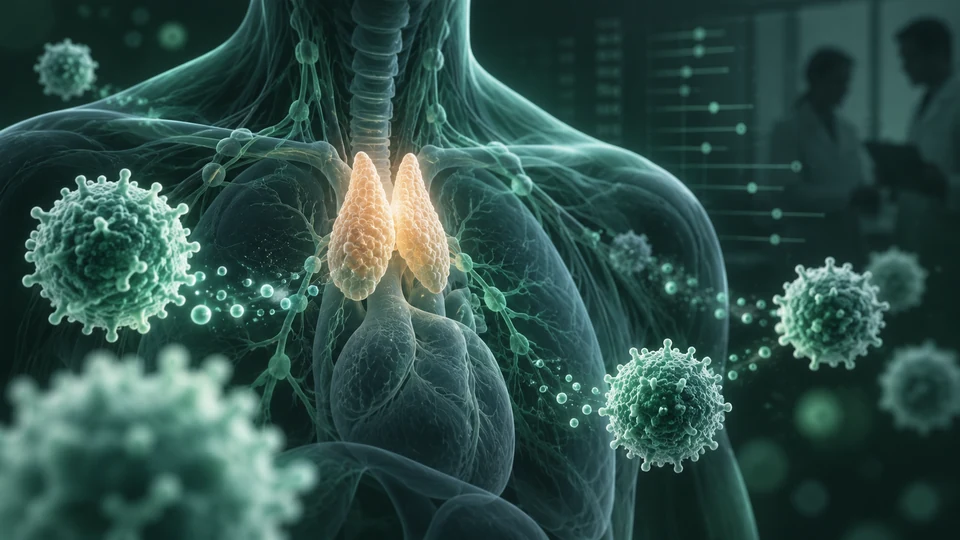
The human reproductive system is controlled by a strict hierarchy known as the hypothalamic pituitary gonadal axis. At the top of this chain, the hypothalamus releases gonadotrophin releasing hormone. This peptide travels a short distance to the pituitary gland, where it binds to specific receptors and triggers the release of two secondary signals: luteinising hormone and follicle stimulating hormone.
These secondary hormones enter the general circulation and travel to the testes or ovaries. In men, luteinising hormone commands the Leydig cells to produce testosterone, while follicle stimulating hormone supports sperm production. In women, these hormones regulate the menstrual cycle, driving egg maturation and the production of oestrogen and progesterone.
Receptor desensitisation and the continuous exposure problem
Negative feedback is only one way the body defends its endocrine balance. The pattern of the hormone signal is just as important as the amount. The hypothalamus does not release gonadotrophin releasing hormone in a steady stream. It releases it in distinct, rhythmic pulses.
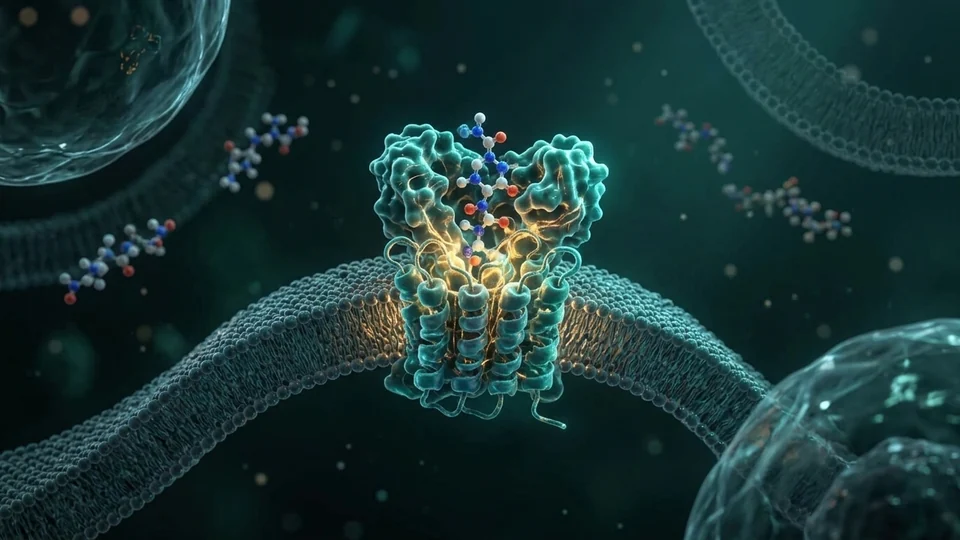
The receptors may uncouple from their internal signalling proteins, or the cell may pull the receptors inside its membrane so they can no longer be activated.
A classic primate study published in 1978 demonstrated exactly how this works. Researchers studied rhesus monkeys that had received hypothalamic lesions, completely abolishing their natural gonadotrophin releasing hormone production. When the researchers administered the synthetic hormone in intermittent pulses of one per hour, the monkeys' pituitary glands resumed normal hormone secretion. However, when the exact same hormone was given as a continuous infusion, the pituitary receptors down regulated and gonadotrophin secretion failed. Animal 1
Where kisspeptin fits into the axis
Because direct hormone replacement and continuous peptide stimulation both suppress the reproductive axis, researchers have looked further upstream for ways to stimulate natural production. This is where kisspeptin enters the research.
Human evidence for kisspeptin-54
In 2005, a double blind placebo controlled study tested kisspeptin-54 in six healthy male volunteers. The researchers administered a 90 minute intravenous infusion at a dose of 4 pmol/kg per minute. Human 2
The study found that the infusion significantly increased plasma concentrations of luteinising hormone, follicle stimulating hormone and testosterone compared with a saline placebo. The researchers also calculated the plasma half life of kisspeptin-54 to be approximately 27.6 minutes, providing early pharmacokinetic data for the full length peptide in humans. Human 2
A subsequent study in 2007 investigated how kisspeptin-54 affects healthy women during different phases of the menstrual cycle. The researchers administered subcutaneous bolus injections at doses ranging from 0.2 to 6.4 nmol/kg. They observed a dose dependent increase in circulating luteinising hormone across all phases of the cycle. The strongest response occurred during the preovulatory phase, while the weakest response was seen during the follicular phase, showing that the body's sensitivity to the peptide changes based on its natural hormone environment. Human 3
Human evidence for kisspeptin-10
A 2011 study in healthy men tested kisspeptin-10 using both intravenous bolus injections and continuous infusions. The researchers found that a single bolus dose of 1 microgram per kilogram caused a rapid and dose dependent rise in serum luteinising hormone concentrations. Human 4
To test sustained exposure, the researchers then administered a continuous infusion of kisspeptin-10 at a dose of 4 micrograms per kilogram per hour for 22.5 hours. This high rate of continuous secretion successfully increased serum testosterone and luteinising hormone, but it obscured the natural pulsatile pattern of the hormones. When they tested a lower dose infusion of 1.5 micrograms per kilogram per hour, they found it increased both the frequency and the mass of the natural hormone pulses without overwhelming the system. Human 4
Desensitisation and the limits of kisspeptin
A 2014 study investigated kisspeptin's effects by administering continuous intravenous infusions of kisspeptin-54 to five women with hypothalamic amenorrhea, a condition characterised by deficient hormone pulsatility. The researchers tested a range of doses up to 1.00 nmol/kg per hour. Human 5
The single blind study found that the infusion temporarily increased the number and size of the luteinising hormone pulses, with the mean peak number of pulses three fold higher than vehicle. However, the researchers noted that while high dose kisspeptin-54 acutely stimulates secretion, chronic administration causes desensitisation. Human 5
This evidence confirms that human biology still prefers pulses. Bypassing the lower levels of the reproductive axis by moving one step higher up the chain does not grant immunity from receptor overload. Chronic administration of kisspeptin will eventually shut down the signalling pathway just as effectively as continuous exposure to downstream hormones.
Kisspeptin-10
Limited evidenceMelanocortin · 6 cited studies
Downgraded from 'mixed' on audit. The only human trials that actually administered kisspeptin-10 are acute intravenous physiology studies with hormonal endpoints in small samples; every randomised behavioural and functional-MRI trial previously cited on this page administered kisspeptin-54, a different peptide. No trial of any kisspeptin has tested the self administered subcutaneous product that is sold, and there is no clinical efficacy endpoint anywhere.
UK status. No MHRA marketing authorisation exists.
Kisspeptin-54
Limited evidenceReproductive & GnRH · 3 cited studies
DOWNGRADED FROM "mixed" ON AUDIT. "Mixed" implies conflicting human results; the kisspeptin-54 human data are not conflicting, they are simply sparse. The three surviving citations are an uncontrolled dose ranging study in 53 women, an early phase study in 60 women, and a crossover mechanistic study in just five women, all from essentially one research group at one centre in London. There is no phase 3 trial, no randomised comparison against a standard ovulation trigger, no independent replication at scale, and no regulatory approval in any jurisdiction. The underlying physiology is exceptionally well established, since human genetics alone proves kisspeptin signalling is essential for reproduction, but physiological certainty is not therapeutic evidence and must not be allowed to inflate the tier. Small, single centre, uncontrolled human studies with no approval is squarely limited.
UK status. No MHRA marketing authorisation.
UK regulations
In the UK, kisspeptin-10 and kisspeptin-54 are experimental research chemicals. They have not been evaluated for safety, efficacy or quality by the regulator and are not licensed medicines. Under the 6, a medicinal product may not be sold or supplied unless it has a marketing authorisation from the 7.
No kisspeptin product has been approved for treating hypogonadism, fertility disorders or hormone suppression. Companies wishing to develop these peptides into prescription drugs must conduct formal clinical trials and 8.
The BioRx conclusion
The human endocrine system is built to resist constant stimulation. Negative feedback loops and receptor desensitisation are natural defences against hormone overload, ensuring that biological signals remain tightly controlled.
However, the research also notes that chronic administration of kisspeptin causes desensitisation, shutting down the very receptors it is meant to stimulate. Kisspeptin remains a subject of active scientific research, not a proven method for overriding human biology or recovering suppressed hormones.
Frequently asked questions
What is negative feedback in endocrinology?
Negative feedback is a biological control mechanism where the end product of a hormone pathway inhibits the signals that triggered its production. For example, high levels of testosterone in the blood signal the brain to stop producing the hormones that stimulate testosterone production.
Why does continuous peptide stimulation cause desensitisation?
When a cell surface receptor is exposed to a constant flood of a stimulating peptide, the cell protects itself by down regulating the receptors. They may be pulled inside the cell membrane or uncoupled from their internal signalling proteins, causing the biological response to stop.
What is the difference between kisspeptin-10 and kisspeptin-54?
Kisspeptin-54 is the full length natural protein consisting of 54 amino acids. Kisspeptin-10 is a truncated fragment containing only the final ten amino acids, which form the active binding site required to activate the KISS1 receptor.
Can kisspeptin shut down natural hormone production?
Human research notes that while kisspeptin acutely stimulates the reproductive axis, chronic administration causes desensitisation. This means the receptors become desensitised and the hormone signalling pathway shuts down, similar to the effect of continuous downstream hormone exposure.
Are kisspeptin peptides approved medicines?
No. Kisspeptin-10 and kisspeptin-54 are experimental research compounds. They are not approved by the MHRA for the treatment of hypogonadism, fertility disorders or any other medical condition.
References
Studies marked "View study in BioRx" sit in the clinical studies index with their design and evidence grade.
- PubMed, PMID 100883
- PubMed, PMID 16174713
- PubMed, PMID 17635940
- George JT, Veldhuis JD, Roseweir AK, Newton CL, Faccenda E, Millar RP, Anderson RA (2011). Kisspeptin-10 is a potent stimulator of LH and increases pulse frequency in men. Journal of Clinical Endocrinology & Metabolism.PubMed · DOI · View study in BioRx
- Jayasena CN, Abbara A, Veldhuis JD, et al. (2014). Increasing LH pulsatility in women with hypothalamic amenorrhoea using intravenous infusion of Kisspeptin-54. Journal of Clinical Endocrinology & Metabolism.PubMed · View study in BioRx
- Human Medicines Regulations 2012, regulation 46: a medicinal product needs a marketing authorisation to be sold or supplied
- MHRA, the Medicines and Healthcare products Regulatory Agency
- MHRA guidance: apply for a licence to market a medicine in the UK